Post
Valved vs Non-Valved Face Masks: Which Offers Better Protection?
May
Valved vs Non-Valved Face Masks: Which Offers Better Protection?
Choosing between valved and non-valved masks can be confusing, especially with so many options available on the market today. Understanding the differences between these designs is essential for selecting the right respiratory protection for your environment, comfort preferences, and health needs. When it comes to valved face masks, many consumers focus primarily on breathability without fully understanding how exhalation valves affect overall protection.
This comprehensive guide explores everything you need to know about valved face masks, including how they work, their advantages and disadvantages, filtration performance, comfort considerations, and the situations where they are most appropriate. Whether you are shopping for daily protection, industrial use, exercise, or pollution defense, understanding the role of valved face masks will help you make a more informed purchasing decision.
Understanding Valved Face Masks
Modern respiratory masks are designed to filter airborne particles while remaining comfortable enough for extended wear. Valved face masks include a built-in exhalation valve that changes how air flows through the mask.
What Is an Exhalation Valve?
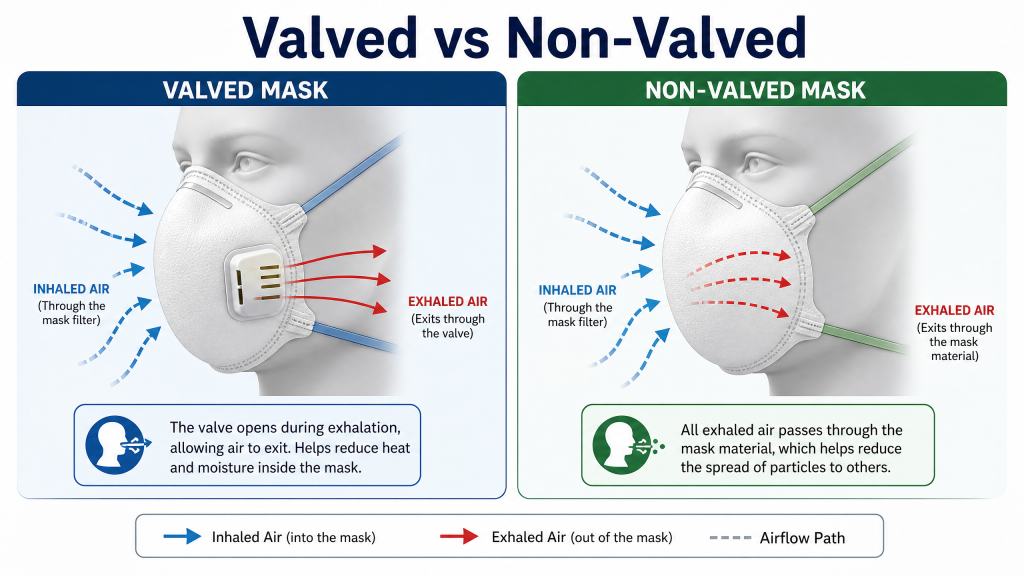
An exhalation valve is a small one-way component typically positioned near the front of the mask. During inhalation, the valve remains closed so incoming air passes through the mask’s filtration layers. During exhalation, the valve opens, allowing warm air and moisture to escape more easily.
This design improves airflow and reduces humidity buildup inside valved face masks, making breathing feel easier compared to fully sealed non-valved respirators.
How Valved Face Masks Work
The filtration layers inside valved face masks operate similarly to standard respirators such as N95 or KN95 masks. They use multiple layers of non-woven filtration material combined with electrostatic technology to trap airborne particles.
The key difference is that exhaled breath exits through the valve with reduced filtration resistance. This improves comfort but changes how the mask protects people around the wearer.
Understanding this distinction is essential when comparing valved face masks with non-valved alternatives.
Advantages of Valved Face Masks
Many people prefer valved face masks because of the significant comfort improvements they provide during long periods of use.
Improved Breathability
One of the biggest advantages of valved face masks is easier breathing during exhalation. The valve allows warm air to escape rapidly, reducing breathing resistance and making extended wear far more comfortable.
This is especially beneficial for:
- Physically demanding work
- Long shifts
- Outdoor labor
- Construction environments
- Industrial settings
- Hot weather conditions
People who wear masks for many consecutive hours often find valved face masks significantly less fatiguing than fully sealed respirators.
Reduced Heat and Moisture Build-Up
Heat and humidity accumulation inside masks can quickly become uncomfortable. Because exhaled air escapes more efficiently, valved face masks help reduce:
- Sweat buildup
- Foggy glasses
- Damp inner layers
- Facial heat
- Moisture irritation
This enhanced airflow makes valved face masks popular among workers operating in physically demanding environments.
Better Comfort During Physical Activity
Exercise and heavy movement increase breathing intensity. The improved airflow in valved face masks helps reduce the sensation of restricted breathing during activity.
Cyclists, warehouse workers, and outdoor laborers often choose valved face masks because the valve allows easier ventilation while maintaining strong filtration during inhalation.
Limitations of Valved Face Masks
Despite their comfort advantages, valved face masks also have important limitations that consumers must understand before purchasing.
Reduced Source Control
The biggest concern with valved face masks is that exhaled air may bypass filtration when leaving the mask.
What Is Source Control?
Source control refers to preventing the wearer from spreading respiratory droplets to others nearby. Non-valved masks filter both inhaled and exhaled air, while valved face masks primarily protect the wearer only.
Because the exhalation valve opens outward, respiratory particles may escape unfiltered. This makes many valved face masks unsuitable for situations where protecting others is equally important.
Why Some Facilities Restrict Valved Masks
During respiratory outbreaks and pandemic situations, many hospitals, airlines, and healthcare facilities restricted valved face masks because they do not provide optimal source control.
In environments where infection prevention matters, non-valved masks are generally preferred.
Not Ideal for Public Health Settings
For crowded indoor areas such as:
- Hospitals
- Clinics
- Public transportation
- Airports
- Schools
- Offices
non-valved respirators are usually recommended instead of valved face masks because they help reduce community transmission risk.
Comparing Valved and Non-Valved Masks
Understanding the practical differences between these mask types helps clarify which situations favor valved face masks and which require non-valved protection.
Filtration Performance
Both valved and non-valved respirators can provide excellent inhalation filtration if properly certified.
Similar Filtration Standards
Certified valved face masks may still meet N95, FFP2, or KN95 filtration standards. This means they can filter at least 94–95% of airborne particles during inhalation.
The valve itself does not reduce incoming air filtration performance.
Differences in Exhalation Filtration
The main difference is exhaled airflow. Non-valved masks filter air in both directions, while face masks focus mainly on protecting the wearer.
Comfort Comparison
Comfort is where face masks typically outperform non-valved alternatives.
Valved Masks Are Cooler
Because hot air escapes efficiently, face masks usually feel:
- Cooler
- Less humid
- Easier to breathe through
- More comfortable for long shifts
Non-Valved Masks Provide Better Containment
Non-valved respirators may feel warmer but provide superior filtration for both inhaled and exhaled air, making them more suitable for healthcare and public settings.
Best Situations for Valved Face Masks
Although they are not appropriate everywhere, valved face masks perform extremely well in certain situations.
Industrial and Construction Work
Dusty environments are among the best use cases for face masks because the wearer benefits from high inhalation filtration and improved breathing comfort.
Workers exposed to:
- Wood dust
- Construction debris
- Sanding particles
- Industrial pollution
- Chemical particulates
often prefer respirators with exhalation valves.
Outdoor Activities
Outdoor users may choose face masks for activities such as:
- Cycling
- Hiking
- Running
- Gardening
- Farming
The added ventilation makes physical activity more manageable while still reducing exposure to dust, smoke, or allergens.
Pollution Protection
In cities with poor air quality, valved face masks can help reduce inhalation exposure to PM2.5 particles, vehicle emissions, and wildfire smoke.
Since pollution protection primarily focuses on filtering inhaled air, valves are less problematic in these situations.
How to Choose Quality Valved Face Masks
Not all masks are manufactured to the same standards. When shopping for face masks, prioritize certified products from reputable suppliers.
Look for Certified Filtration Standards
Reliable face masks should display certifications such as:
- NIOSH N95
- FFP2
- FFP3
- KN95
- KF94
These certifications indicate independently tested filtration performance.
Evaluate Valve Design
High-quality face masks use durable silicone or plastic valves that open and close smoothly. Poorly designed valves may leak excessively or become damaged during use.
Prioritize Fit and Seal
A tight facial seal remains essential. Even the best face masks lose effectiveness if gaps exist around the cheeks or nose.
Look for features like:
- Adjustable nose clips
- Elastic headbands
- Multiple size options
- Soft sealing edges
Proper Use and Maintenance
Correct handling is essential for maximizing the performance of face masks.
Wearing Your Mask Correctly
To wear face masks properly:
- Wash your hands before handling the mask.
- Position the mask over your nose and mouth.
- Adjust the nose wire firmly.
- Ensure the valve remains unobstructed.
- Check for gaps around the edges.
Avoid Touching the Valve
The valve area should remain clean and unobstructed. Avoid covering or tampering with the valve while wearing the mask.
Replacing Valved Masks
Disposable face masks should be replaced when:
- Breathing becomes difficult
- The mask becomes wet
- Straps weaken
- Filtration layers deform
- The valve becomes damaged
Reusable models should be maintained according to manufacturer guidelines.
Common Misconceptions About Valved Face Masks
Several myths surround face masks, especially regarding filtration performance.
Myth: Valved Masks Filter Less Air
This is incorrect. Certified face masks can provide the same inhalation filtration efficiency as non-valved respirators.
Myth: Valved Masks Are Unsafe
The issue is not wearer protection — it is outward filtration. Valved face masks remain highly effective for protecting the wearer from airborne particles.
Myth: Valves Make Masks Weaker
High-quality exhalation valves do not reduce the structural integrity of certified respirators when properly manufactured.
Conclusion: Are Valved Face Masks Right for You?
Choosing between valved and non-valved masks depends entirely on your environment and priorities. face masks excel in comfort, breathability, and heat reduction, making them excellent choices for industrial work, outdoor activity, pollution protection, and long-duration wear.
However, because face masks allow unfiltered exhaled air to escape, they are less suitable for healthcare settings, crowded indoor spaces, and situations where protecting others is essential.
If your primary goal is personal respiratory protection with improved comfort, high-quality certified face masks can be extremely effective. If source control and public safety are equally important, non-valved respirators remain the better choice.
By understanding the strengths and limitations of face masks, you can confidently select the right respiratory protection for your lifestyle, work environment, and health needs.
