Post
How to Choose Face Mask for Your Needs
May
How to Choose the Right Face Mask for Your Needs
Choosing the right face mask can feel overwhelming with so many options available today. From disposable surgical masks to advanced respirators, understanding how to choose face mask products correctly is essential for protecting your health while staying comfortable during daily use. The right mask can help reduce exposure to airborne particles, allergens, pollution, and other respiratory hazards, while the wrong one may provide limited protection or become uncomfortable after only a short period of wear.
This comprehensive guide explains how to choose face mask options based on your lifestyle, environment, comfort preferences, and protection requirements. Whether you need a mask for commuting, work, travel, allergies, or high-risk environments, understanding the key differences between mask types will help you make a confident and informed decision.
Why Understanding How to Choose Face Mask Matters
Learning how to choose face mask products properly goes far beyond selecting a mask that simply looks good. A face mask must balance protection, fit, breathability, and durability to provide meaningful performance in real-world conditions.
The effectiveness of any mask depends on several critical factors, including:
- Filtration efficiency
- Facial seal and fit
- Breathability
- Material quality
- Intended use
- Duration of wear
People often focus only on filtration ratings while ignoring comfort and fit. However, even highly rated masks may perform poorly if they leak around the edges or become too uncomfortable to wear consistently. Understanding how to choose face mask designs that suit your individual needs ensures better long-term protection and usability.
Understanding Different Types of Face Masks
Before deciding how to choose face mask products, it is important to understand the main categories available on the market.
N95 Respirators
N95 respirators are among the highest-performing masks for everyday respiratory protection. These masks are certified by NIOSH in the United States and filter at least 95% of airborne particles as small as 0.3 microns.
N95 masks are ideal for:
- Healthcare settings
- Crowded indoor environments
- Areas with poor air quality
- High-risk exposure situations
When researching how to choose face mask options for maximum filtration, N95 respirators are often considered the gold standard because of their strict certification standards and consistent performance.
KN95 Masks
KN95 masks follow Chinese filtration standards and are similar to N95 respirators in performance. Most genuine KN95 masks also provide approximately 95% filtration efficiency.
For many consumers learning how to choose face mask products, KN95 masks offer a balance between affordability, protection, and comfort. Their boat-shaped design often provides additional breathing space, making them popular for extended wear.
Surgical Masks
Surgical masks are lightweight disposable masks designed primarily to block droplets and larger particles. They are widely used in medical environments and public settings.
People exploring how to choose face mask solutions for routine errands or low-risk activities may find surgical masks sufficient due to their affordability and convenience.
Cloth Masks
Cloth masks are reusable and environmentally friendly. While their protection level varies depending on fabric quality and layering, high-quality cloth masks with filter pockets can offer solid everyday protection.
Consumers focused on sustainability often prioritize reusable options when deciding how to choose face mask products for daily use.
Key Factors to Consider When Learning How to Choose Face Mask
Selecting the ideal mask requires balancing multiple factors. Below are the most important elements to evaluate.
Filtration Efficiency and Protection Levels
One of the first considerations in how to choose face mask products is filtration performance. Different masks are designed to filter different particle sizes and exposure levels.
Understanding Filtration Ratings
Common mask certifications include:
- N95 (USA)
- KN95 (China)
- FFP2 (Europe)
- FFP3 (Europe)
- ASTM surgical mask levels
These ratings indicate how effectively a mask captures airborne particles under testing conditions.
When evaluating how to choose face mask products for pollution, viruses, smoke, or allergens, selecting certified masks with independently verified filtration data is highly recommended.
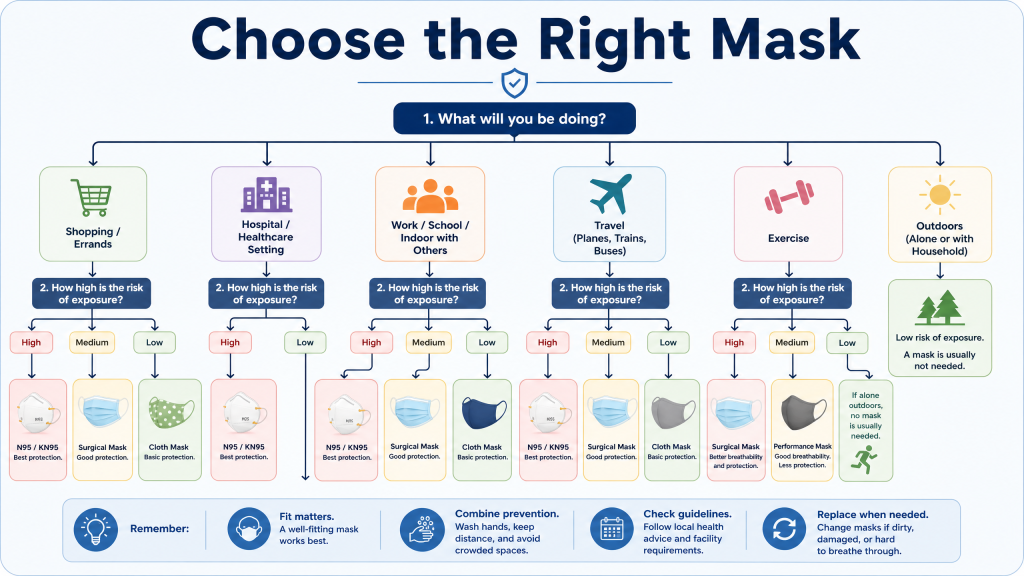
Matching Protection to Your Environment
Your environment should guide your decision when determining how to choose face mask options.
High-Risk Situations
For hospitals, crowded public transportation, or wildfire smoke exposure, choose masks with high filtration ratings like N95 or KN95.
Moderate-Risk Situations
For office settings, shopping, or indoor gatherings, surgical masks or quality reusable masks may provide sufficient protection.
Low-Risk Situations
For outdoor walks or brief errands, comfortable cloth masks may be appropriate depending on air quality conditions.
Face Mask Fit and Seal
A secure fit is one of the most important factors in how to choose face mask performance. Even highly efficient filters become less effective if air escapes around the edges.
Why Fit Matters
Air naturally follows the path of least resistance. If gaps exist near the nose, cheeks, or chin, unfiltered air bypasses the filtration layers entirely.
This is why understanding how to choose face mask styles that match your face shape is essential for maximizing protection.
Features That Improve Fit
Look for masks with:
- Adjustable nose wires
- Elastic head straps
- Adjustable ear loops
- Contoured or 3D shapes
- Multiple size options
Masks with customizable fit features tend to provide better comfort and seal quality.
Signs of Poor Fit
Your mask may not fit correctly if:
- Glasses fog excessively
- Air leaks near the eyes
- The mask slides during talking
- Gaps appear around the cheeks
- The mask feels loose under the chin
Proper fit is central to understanding how to choose face mask products that deliver real-world effectiveness.
Breathability and Comfort
Comfort is often overlooked when discussing how to choose face mask products, but it plays a major role in whether people wear masks consistently.
Breathability for Daily Use
Masks with excellent filtration can sometimes feel restrictive during extended wear. Modern high-quality masks use advanced melt-blown filtration materials that improve airflow without sacrificing protection.
If you wear masks for long periods, prioritize:
- Lightweight materials
- Soft inner lining
- Moisture-wicking fabrics
- Spacious 3D structure
Ear Loops vs Head Straps
When exploring how to choose face mask styles, strap design significantly impacts comfort.
- Ear loops are convenient and quick to wear
- Head straps typically provide a tighter seal and reduce ear pressure
Frequent mask wearers often prefer head-strap designs for all-day comfort.
Reusable vs Disposable Masks
Another major consideration in how to choose face mask products is whether to select reusable or disposable options.
Advantages of Disposable Masks
Disposable masks offer:
- Convenience
- No cleaning required
- Reliable filtration consistency
- Ideal emergency use
N95 and surgical masks are common disposable options.
Advantages of Reusable Masks
Reusable masks provide:
- Lower long-term cost
- Reduced environmental waste
- Greater style variety
- Better sustainability
People researching how to choose face mask products for everyday commuting often prefer reusable masks with replaceable filters.
How to Choose Face Mask for Allergies and Pollution
Seasonal allergies and air pollution are increasingly common reasons people wear masks.
Masks for Allergy Protection
If pollen is your main concern, select masks with:
- Tight facial seal
- Multi-layer filtration
- Replaceable filters
- Breathable fabric
Understanding how to choose face mask products for allergies can significantly reduce exposure to pollen, dust, and airborne irritants.
Masks for Air Pollution
In cities with poor air quality, prioritize masks certified for fine particulate filtration such as PM2.5 protection.
N95 and KN95 masks are highly effective for pollution because they filter microscopic airborne particles produced by smoke, traffic, and industrial pollution.
Proper Usage Tips
Even after learning how to choose face mask products correctly, proper usage is essential for effectiveness.
How to Wear a Face Mask Correctly
- Wash your hands before handling the mask.
- Cover both nose and mouth completely.
- Secure the mask under your chin.
- Adjust the nose wire for a tight seal.
- Avoid touching the front of the mask during use.
Replacing and Cleaning Masks
Disposable masks should be replaced when:
- They become dirty
- Breathing becomes difficult
- The mask loses shape
- Straps weaken
Reusable masks should be washed regularly according to manufacturer instructions.
Common Mistakes When Choosing Face Masks
Many consumers misunderstand how to choose face mask products effectively. Common mistakes include:
- Prioritizing style over protection
- Ignoring fit and seal
- Purchasing counterfeit masks
- Reusing disposable masks excessively
- Choosing masks without certifications
Avoiding these mistakes improves both safety and comfort.
Where to Buy Quality Face Masks
Buying from reputable sellers is essential when learning how to choose face mask products safely.
Reliable sources include:
- Pharmacies
- Medical supply companies
- Authorized online retailers
- Direct manufacturer websites
Always verify certifications and avoid suspiciously cheap products that may be counterfeit.
Conclusion: Mastering How to Choose Face Mask Products
Understanding how to choose face mask options properly helps you balance protection, comfort, affordability, and convenience. The best mask is not simply the one with the highest filtration rating — it is the one that fits well, feels comfortable enough for consistent wear, and matches your specific lifestyle and exposure risks.
For maximum protection, certified N95 or KN95 masks remain excellent choices. For daily errands and lower-risk environments, surgical masks or quality reusable masks can provide dependable protection with added comfort and sustainability.
As mask technology continues evolving, consumers who understand how to choose face mask products will be better prepared to protect themselves from airborne threats while maintaining comfort in everyday life.
