Post
KN95 Face Masks: Everything You Need to Know Before Buying
May
KN95 Face Masks: Everything You Need to Know Before Buying
In recent years, KN95 face masks have become one of the most recognized respiratory protection products worldwide. Whether used for daily commuting, travel, healthcare environments, or protection against air pollution, KN95 masks are widely valued for their high filtration efficiency and comfortable design.
However, not all masks on the market offer the same quality or level of protection. With so many options available online and in stores, consumers often struggle to identify authentic products, understand certifications, and choose the right mask for their specific needs.
This comprehensive guide explains how KN95 face masks work, their benefits, important certifications, proper usage, maintenance, and tips for selecting high-quality products.
Understanding KN95 Face Masks
KN95 face masks are respirators designed to filter airborne particles and reduce exposure to pollutants, bacteria, droplets, and other contaminants. The “KN95” designation comes from Chinese respiratory protection standards and indicates that the mask filters at least 95% of airborne particles under testing conditions.
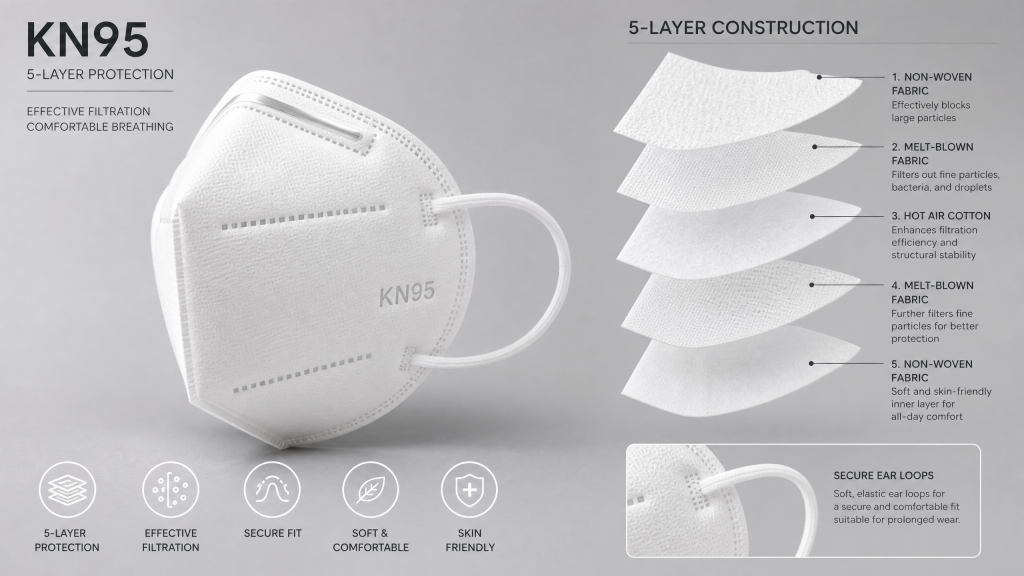
Unlike basic cloth or surgical masks, KN95 masks are specifically engineered for improved filtration and facial sealing. Their multi-layer construction combines physical filtration with electrostatic filtering technology to capture microscopic particles effectively.
Most modern KN95 face masks feature several protective layers:
- An outer protective layer that blocks larger particles
- Middle filtration layers that trap fine airborne contaminants
- A soft inner layer that improves comfort and moisture control
This layered structure helps provide both effective filtration and reasonable breathability during daily wear.
Why KN95 Face Masks Are So Popular
The global demand for KN95 face masks increased rapidly because they offer a strong balance between protection, affordability, and accessibility.
Many people prefer KN95 masks because they:
- Filter fine airborne particles efficiently
- Provide better protection than basic cloth masks
- Are lightweight and easy to wear
- Work well in crowded environments
- Help reduce exposure to pollution and allergens
For commuters, travelers, office workers, and individuals in urban environments, KN95 masks provide practical respiratory protection without requiring professional fit testing in most everyday situations.
How KN95 Face Masks Work
The effectiveness of KN95 face masks comes from both mechanical and electrostatic filtration.
Mechanical Filtration
The dense fiber layers physically block larger airborne particles from passing through the mask.
Electrostatic Filtration
Electrostatically charged materials attract and trap microscopic particles that may otherwise pass through traditional fabrics.
This combination allows KN95 masks to filter extremely small airborne contaminants while still allowing airflow for breathing.
Proper fit is equally important. Even high-quality KN95 face masks lose effectiveness if air leaks around the sides instead of passing through the filter material.
Key Benefits of KN95 Face Masks
High Filtration Efficiency
One of the biggest advantages of KN95 face masks is their ability to filter at least 95% of airborne particles when properly manufactured and worn correctly.
This level of filtration makes them useful in environments with:
- Heavy traffic pollution
- Crowded public transportation
- Dust exposure
- Seasonal allergens
- Airborne health risks
Comfortable Everyday Protection
Modern KN95 masks are designed with comfort in mind. Many include:
- Adjustable nose bridges
- Soft ear loops
- Lightweight materials
- Breathable inner linings
- 3D ergonomic structures
These features improve wearability during long periods of use.
Better Seal Than Basic Masks
Compared to loose-fitting surgical or cloth masks, KN95 face masks create a closer seal around the nose and mouth, reducing the amount of unfiltered air entering from the sides.
KN95 Face Masks vs N95 Masks
Consumers often compare KN95 masks with N95 respirators because both are designed to filter 95% of airborne particles.
Similarities
Both standards require high filtration efficiency and are intended to protect against airborne contaminants.
Differences
The primary differences involve certification systems and testing procedures.
- N95 masks are certified by NIOSH in the United States
- KN95 masks follow Chinese GB2626 standards
While performance can be very similar, quality control may vary between manufacturers. This is why purchasing authentic KN95 face masks from trusted suppliers is extremely important.
How to Choose the Best KN95 Face Masks
Selecting the right mask involves more than simply choosing the cheapest option available.
Check Certification Information
Legitimate KN95 face masks should clearly display certification details, manufacturer information, and compliance markings.
Avoid products with missing labeling or vague claims.
Evaluate Mask Construction
High-quality masks typically include:
- Multi-layer filtration systems
- Strong ear loops
- Flexible nose wires
- Durable materials
- Consistent stitching
Poor construction may reduce both comfort and protection.
Consider Your Daily Usage
Different users have different priorities:
- Commuters may prioritize comfort and breathability
- Travelers may prefer foldable lightweight masks
- Workers in polluted environments may need extended-wear durability
Choosing the right KN95 face masks depends on your personal lifestyle and exposure level.
Properly Wearing KN95 Face Masks
Correct usage is essential for achieving effective protection.
Position the Mask Correctly
The mask should fully cover:
- The nose
- The mouth
- The chin
Adjust the Nose Bridge
Press the nose wire firmly against the nose to minimize gaps and improve the seal.
Check for Air Leaks
If air escapes around the sides while breathing, adjust the straps or reposition the mask.
Properly fitted KN95 face masks provide significantly better protection than loosely worn alternatives.
How Long Can KN95 Face Masks Be Used?
Most KN95 masks are designed for limited reuse rather than indefinite wear.
The lifespan depends on:
- Air quality conditions
- Moisture exposure
- Physical wear
- Breathing resistance
In normal daily environments, many users wear the same mask for several sessions if it remains clean and undamaged.
However, replace KN95 face masks immediately if they:
- Become wet
- Develop odors
- Lose shape
- Tear or deform
- Become difficult to breathe through
Common Mistakes When Using KN95 Face Masks
Many people unintentionally reduce mask effectiveness through improper use.
Wearing the Mask Below the Nose
Leaving the nose exposed defeats the purpose of respiratory protection.
Reusing Damaged Masks
Masks with stretched straps or damaged filtration material no longer provide reliable protection.
Touching the Front Surface Frequently
The outer layer may collect contaminants during use.
Buying Counterfeit Products
Fake KN95 face masks became a major problem during periods of high demand. Always purchase from reputable retailers or authorized distributors.
Can KN95 Face Masks Be Used for Air Pollution?
Yes. One of the major benefits of KN95 face masks is their ability to filter fine particulate matter commonly found in polluted urban environments.
They are especially useful against:
- PM2.5 particles
- Vehicle exhaust pollution
- Construction dust
- Wildfire smoke
- Industrial emissions
People living in heavily polluted cities often use KN95 masks during commuting and outdoor activities to reduce daily exposure to harmful airborne particles.
Storing KN95 Face Masks Properly
Proper storage helps maintain cleanliness and mask performance.
Store masks in:
- Clean breathable containers
- Paper bags
- Dry environments away from moisture
Avoid leaving KN95 face masks inside hot vehicles or damp locations where the filtration materials may deteriorate.
The Future of KN95 Face Masks
Manufacturers continue improving mask technology to enhance comfort, sustainability, and filtration performance.
New innovations include:
- Reusable filter systems
- Eco-friendly materials
- Improved breathability
- Skin-friendly fabrics
- Smart filtration monitoring technologies
As awareness of respiratory health and air pollution grows globally, demand for advanced KN95 is expected to remain strong.
Conclusion: Choosing the Right KN95 Face Masks
High-quality KN95 provide effective protection against airborne particles, pollutants, and respiratory hazards when used correctly. Their combination of strong filtration efficiency, affordability, and comfort makes them one of the most practical mask options for everyday use.
The most important factors when choosing a KN95 mask include authenticity, fit, comfort, and verified filtration standards. A properly fitted mask from a reputable manufacturer offers significantly better protection than poorly made or counterfeit alternatives.
By understanding how KN95 face masks work and how to use them properly, consumers can make informed decisions that support safer breathing and better respiratory health in both daily life and high-risk environments.
