Post
Face Mask Fit Guide: Finding the Perfect Size and Seal
May
Face Mask Fit Guide: Finding the Perfect Size and Seal
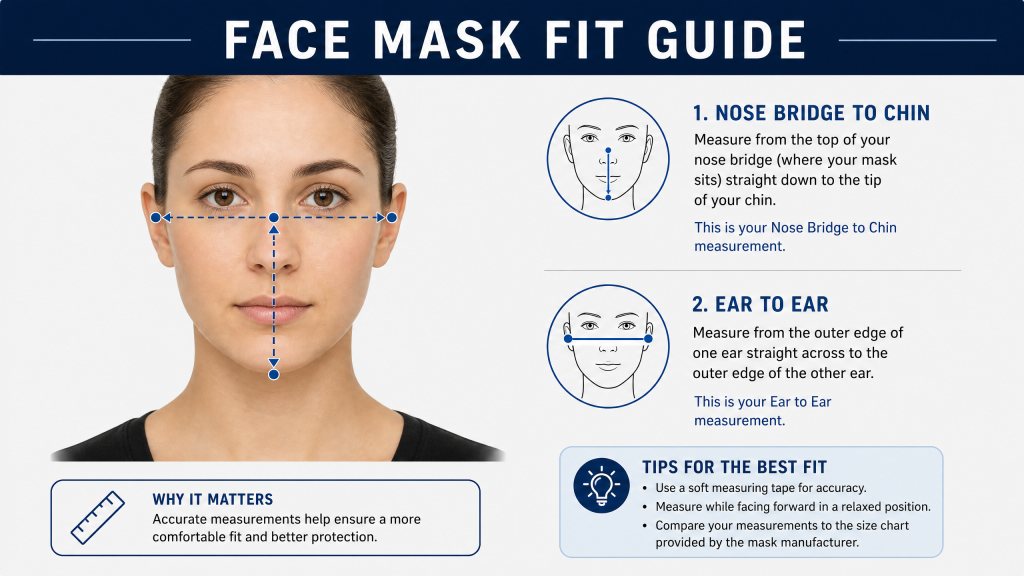
Choosing the right mask is about more than filtration ratings and materials. One of the most important factors affecting protection is face mask fit. Even a high-quality mask can lose much of its effectiveness if it does not seal properly against the face. Gaps around the nose, cheeks, or chin allow unfiltered air to bypass the mask entirely, reducing its ability to protect against airborne particles, allergens, smoke, and pollutants.
A proper fit also affects comfort, breathability, and long-term wearability. Masks that constantly slip, pinch, or create pressure points are less likely to be worn consistently. Understanding how to achieve the ideal face mask fit helps users maximize both safety and comfort in everyday situations.
This complete guide explains how mask fit works, why it matters, how to choose the correct size, and how to improve the seal for better respiratory protection.
Why Face Mask Fit Matters
The effectiveness of any mask depends not only on filtration material but also on how well it seals against the face. Poorly fitted masks allow air to leak around the edges instead of passing through the filter layers.
Proper face mask fit helps ensure that inhaled and exhaled air moves through the mask’s filtration system rather than through open gaps.
A secure fit is especially important in environments with:
- Air pollution
- Airborne allergens
- Crowded indoor spaces
- Smoke exposure
- Dusty work environments
- Respiratory health risks
Even masks with high filtration ratings such as N95 or KN95 perform poorly if they do not fit correctly.
Understanding Face Mask Fit Basics
Every face shape is different, which means there is no universal mask design that fits everyone perfectly. Factors such as nose shape, chin size, facial width, and facial hair can all affect how well a mask seals.
Most face mask fit issues occur in three main areas:
- Around the bridge of the nose
- Along the cheeks
- Under the chin
Air naturally follows the path of least resistance. If openings exist around the edges, contaminated air can enter without passing through the filtration layers.
Key Features That Improve Face Mask Fit
Modern masks often include design features specifically intended to improve sealing and comfort.
Adjustable Nose Bridges
Flexible nose wires help shape the mask securely around the nose and cheeks. This reduces upward airflow and helps prevent glasses from fogging.
Elastic Ear Loops or Head Straps
Proper tension is essential for effective face mask fit. Adjustable ear loops or headbands allow users to customize tightness without causing discomfort.
Structured 3D Designs
Three-dimensional mask shapes provide more breathing space while improving the overall seal around the face.
Multiple Size Options
Some premium masks are available in small, medium, and large sizes to better match different facial structures.
How to Check Face Mask Fit Properly
A simple fit check can help determine whether your mask seals correctly.
Step 1: Cover Nose and Chin Completely
The mask should fully cover:
- The bridge of the nose
- Both sides of the mouth
- The chin area
Step 2: Adjust the Nose Wire
Press the nose bridge firmly against your face to minimize air leakage.
Step 3: Test for Air Leaks
Breathe in and out sharply. If air escapes heavily around the eyes or cheeks, the seal may need adjustment.
Step 4: Check Movement
A proper face mask fit should stay in place when speaking or moving your head without constant repositioning.
Face Mask Fit and Filtration Performance
Filtration efficiency alone does not guarantee protection. A poorly fitted mask with a 95% filtration rating may perform worse than a lower-rated mask with an excellent seal.
This is because leakage can allow unfiltered air to bypass the filtration material entirely.
For this reason, proper face mask fit is considered equally important as filtration quality in professional respiratory protection standards.
Common Face Mask Fit Problems
Many users experience similar mask fitting challenges.
Gaps Around the Nose
This is one of the most common issues. Poor nose sealing often causes glasses to fog and reduces overall protection.
Loose Chin Area
Masks that ride up or leave open space beneath the chin may fail to maintain an effective seal.
Ear Loop Discomfort
Tight straps can create pressure behind the ears during long periods of use.
Mask Slipping During Talking
Some masks shift frequently while speaking, reducing consistent face mask fit throughout the day.
Choosing the Right Face Mask Fit for Your Face Shape
Different face shapes benefit from different mask styles.
Narrow Faces
People with narrow faces often benefit from smaller masks or adjustable ear loops that tighten the seal along the cheeks.
Round Faces
Larger or more flexible masks may provide better coverage and comfort for rounder face shapes.
High Nose Bridges
Masks with stronger adjustable nose wires tend to work best for users with prominent nose bridges.
Facial Hair Considerations
Beards can interfere with face mask fit by preventing the mask from sealing tightly against the skin. Shorter facial hair generally improves mask performance.
Best Mask Types for Secure Face Mask Fit
Certain mask styles naturally provide stronger sealing performance.
N95 Respirators
N95 masks are specifically designed for close facial sealing and high filtration efficiency.
KN95 Masks
KN95 masks often provide a secure fit with foldable designs and flexible nose bridges.
FFP2 and FFP3 Respirators
These European-standard respirators offer excellent filtration and are engineered for strong face mask fit in medical and industrial settings.
Reusable Masks with Adjustable Features
High-quality reusable masks featuring adjustable straps and structured shapes can also achieve excellent sealing performance.
Improving Face Mask Fit at Home
Users can make small adjustments to improve mask performance without purchasing new products.
Tighten Ear Loops
Using adjustable clips or knotting ear loops can reduce side gaps.
Use Mask Brackets Carefully
Some internal mask supports improve breathing comfort, although they should not compromise the seal.
Add Nose Foam Strips
Soft foam strips around the nose area can improve comfort and reduce leakage.
Layer Masks Correctly
In some situations, layering a cloth mask over a surgical mask may improve overall face mask and filtration.
Face Mask Fit for Children
Children require specially designed masks because adult sizes rarely fit properly on smaller faces.
A child’s mask should:
- Fit snugly without gaps
- Stay secure during movement
- Allow comfortable breathing
- Fully cover the nose and chin
Proper face mask is especially important for children because loose masks provide limited protection.
Face Mask Fit During Exercise
Physical activity increases breathing intensity, which may expose weaknesses in mask sealing.
Masks used during exercise should provide:
- Secure fit during movement
- Good breathability
- Moisture management
- Lightweight construction
Athletic mask designs often balance airflow and face mask more effectively than standard disposable options.
Maintaining Good Face Mask Fit Over Time
Masks gradually lose shape and elasticity with repeated use.
Signs that a mask no longer fits properly include:
- Loose straps
- Warped shape
- Persistent air leakage
- Reduced comfort
- Difficulty maintaining position
Replacing worn-out masks helps preserve consistent face mask and filtration performance.
Common Mistakes That Ruin Face Mask Fit
Many users unknowingly reduce protection through simple habits.
Wearing the Mask Below the Nose
This completely compromises respiratory protection.
Reusing Damaged Masks
Stretched straps and weakened materials reduce sealing ability.
Choosing the Wrong Size
Masks that are too large or too small often create major leakage points.
Ignoring Comfort Issues
Uncomfortable masks are less likely to be worn correctly and consistently.
The Future of Face Mask Fit Technology
Manufacturers continue developing advanced designs to improve both protection and comfort.
New innovations include:
- Adaptive facial sealing materials
- Smart fit sensors
- Memory-shape nose bridges
- Adjustable tension systems
- Lightweight ergonomic materials
Future mask designs will likely focus even more heavily on personalized face mask solutions for different face shapes and usage needs.
Conclusion: Why Face Mask Fit Is Essential
Achieving proper face mask is one of the most important factors in maximizing respiratory protection. Even the best filtration materials cannot perform effectively if air leaks around the edges of the mask.
The ideal mask should seal securely around the nose, cheeks, and chin while remaining comfortable enough for consistent daily use. Features such as adjustable nose bridges, flexible straps, and ergonomic designs can significantly improve fit and overall protection.
By understanding how mask fit works and learning how to select and adjust masks properly, users can greatly improve both comfort and safety in environments where airborne particles, allergens, pollution, or respiratory hazards are present.
