Post
Face Masks for Kids: Safe and Comfortable Options for Children
May
Face Masks for Kids: Safe and Comfortable Options for Children
Finding the right face masks for kids presents unique challenges for parents. Children have smaller faces, different breathing needs, and less patience with uncomfortable gear than adults. This comprehensive guide to face masks covers everything parents need to know about selecting, fitting, and encouraging mask use in children of all ages.
Why Face Masks for Kids Need Special Consideration
Face masks cannot simply be downsized versions of adult masks. Children’s facial anatomy differs significantly from adults — their faces are proportionally wider, their noses are less prominent, and the distance from nose to chin is shorter. Face masks must account for these anatomical differences to provide both adequate protection and a comfortable, wearable fit that children will actually keep on their faces.
Age-Appropriate Face Masks for Kids
Face Masks for Kids Ages 2-5
Face masks in the toddler and preschool age range require the greatest care. Masks for this age group should have soft, gentle materials that don’t irritate sensitive skin, very secure but comfortable ear loops, and lightweight construction that doesn’t feel burdensome. Extra-small face masks aged 2-5 are available from specialty manufacturers who understand the specific requirements of this age group.
Face Masks for Kids Ages 6-12
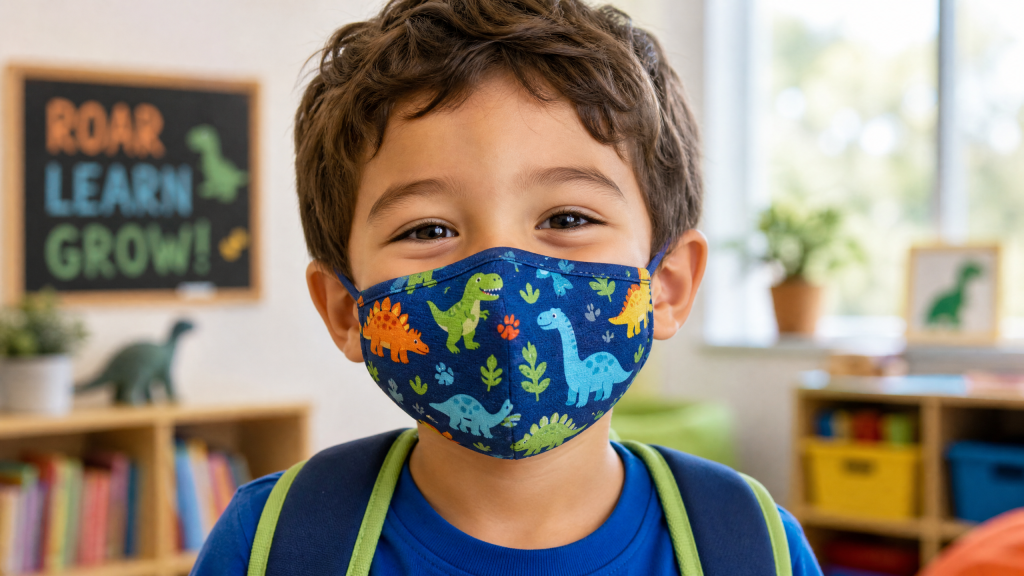
School-age children benefit from face masks for kids that balance protection with fun. Masks featuring popular characters, bright colors, or interesting patterns make wearing them more appealing. Face masks in this age range should fit snugly but comfortably, with adjustable ear loops or ties that accommodate the range of face sizes in elementary school children.
Face Masks for Kids Ages 12-17
Older children and teenagers often prefer face masks that look more like adult styles. Many adult small-size masks fit well in this age range. Face masks in their teenage years should prioritize proper fit and protection while offering style options that feel age-appropriate and help teenagers feel comfortable wearing their masks.
Key Features of Quality Face Masks for Kids
Proper Sizing in Face Masks for Kids
Correct sizing is the most critical feature of face masks for kids. Measure your child’s face from the bridge of the nose to just below the chin, and from ear to ear across the cheeks. Use these measurements to select face masks from manufacturer size charts. Well-fitted face masks provide better protection and are more comfortable, making children more likely to wear them without complaint.
Breathable Materials for Face Masks for Kids
Children are more active than most adults, requiring face masks that allow excellent airflow. Look for face masks made from breathable fabrics like cotton, bamboo, or specialized performance textiles. Multi-layer face masks should balance filtration with breathability — a mask so restrictive that a child constantly pulls it down provides no protection at all.
Safe Construction in Face Masks for Kids
Safety considerations for face masks for kids go beyond filtration. Ensure that face masks don’t have small parts that could become choking hazards. Metal nose wires in face masks should be securely enclosed in fabric. Ear loops should be soft enough not to cause pressure sores behind the ears during extended wear. Quality face masks are tested specifically for pediatric safety standards.
Getting Children to Wear Face Masks for Kids Consistently
Making Face Masks for Kids Fun
Encouraging consistent use of face masks for kids requires creative engagement. Allow children to choose their own face masks from a selection of options — having input in the decision increases buy-in. Face masks featuring favorite characters, sports teams, or personal interests transform mask wearing from a chore into an expression of personality.
Practicing with Face Masks for Kids at Home
Before children need to wear face masks in real-world situations, practice at home. Start with short wearing periods and gradually increase duration. Make putting on face masks part of a fun routine — some parents create songs or games around mask wearing. Positive reinforcement when children wear their face masks without complaint builds healthy habits.
How to Wash Face Masks
Maintaining cleanliness is especially important for face masks for kids, as children’s immune systems are still developing. Wash face masks after every use in hot water with gentle, fragrance-free detergent to minimize skin irritation. Store clean face masks in individual labeled bags to prevent mix-ups among siblings. Regularly inspect face masks for wear and replace them when they show signs of degradation.
Face Masks for Kids in School Settings
School use requires face masks that can last a full day comfortably. Send children with at least two face masks so they have a backup if one becomes soiled or damaged. Label all face masks clearly with the child’s name. Pack face masks in a clean paper bag for storage during lunch breaks when children need to eat mask-free.
Conclusion: Choosing the Right Face Masks for Kids
The ideal face masks combine proper fit, comfortable materials, adequate protection, and designs that children actually want to wear. By involving children in the selection process and making mask wearing as comfortable and enjoyable as possible, parents can ensure their children consistently benefit from the protection that quality face masks provide.
